Takeaways
- Expanding into markets such as trailers and upfittings allows dealerships to capitalize on customer trust and attract new clients.
- Entering trailer sales requires careful planning, state licensing and environmental compliance regulations.
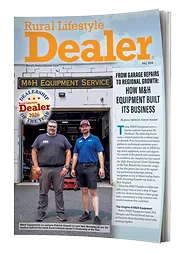
For equipment dealerships looking to expand into new markets to capture new revenue streams, diversifying into trailers and truck upfittings offer a huge opportunity. Rural Lifestyle Dealer’s 2026 Dealership of the Year, M&H Equipment, saw the growth possibilities through the expansion, and it started with knowing their customer’s needs.
Capitalizing on Existing Customer Trust
Co-owners Patrick Howell and Neil Mongeau recognized that their existing customers relied on trailers daily, and saw a clear opportunity to simplify the purchasing process for them. Customers who were visiting the shop for equipment or service were pulling trailers bought from other dealers. By offering trailers, they provided a more seamless experience for contractors who already trusted the dealership, and it gave M&H and new revenue opportunity.
“How do we get the guys who are buying from us and already trust us to buy more from us?” Howell says. “They all have trailers, let's get trailers.”
The opportunity also allowed M&H to reach beyond its traditional customer base and into other industries. Electricians, plumbers, commercial construction companies and pavers were some of the new customers that trailers and truck upfittings brought in.
Everything But the Truck
After establishing trailer sales, M&H further expanded into truck body installations and custom upfittings. Embracing what Howell calls the “everything but the truck” concepts, clients would bring their trucks into M&H, where the team handles the full upfitting process. This included flatbeds, dump body installs, strobe lights, bumpers, hitches, snow removal equipment and more.
Licensing & Facility Compliance
Entering the trailer and truck upfitting market required extensive preparation for M&H Equipment. Before they could sell, they had to complete Connecticut’s Department of Motor Vehicles (DMV) licensing process.
This process required extensive paperwork, bonds and approval before the dealership could legally register trailers for customers. The whole process to gain their license to sell took around 5 months.
M&H was required to meet a range of requirements that went well beyond just having a license. They had to document its facilities, prove that the property was not already contaminated and address environmental safeguards. Some of the safeguards included oil-spill procedures, containment around wash stations and ensuring floor drains were properly contained. The dealership was also required to show proof it was not located in a protected watershed or within restricted proximity to wetlands.
“We are held to the same requirements selling trailers as you would be if you sold 1,000 cars a year at a Hyundai dealer,” Howell says.
M&H Equipment’s successful expansion into trailers and truck upfittings highlights the value of leveraging existing customer relationships. By recognizing their clients’ evolving needs and committing to the thorough process, the dealership was able to broaden its reach and establish a new growth segment in their dealership,
To learn more about M&H’s expansion opportunities, read Jenna Upchurch’s article “From Garage Repairs to Regional Growth: How M&H Equipment Built Its Business” featured in the September issue of Rural Lifestyle Dealer.