With the gatherings of the Farm Equipment Dealership Minds Summit and the National Strip-Tillage Conference a few days away, recent conversations caused me to pause and think about another paradigm shift in basic agricultural methodology that we, quite possibly, could be witnessing.
This could be another event like what followed the advent of no-till farming: autonomous farming.
I recently had a conversation at our farm with Greg Peterson, Machinery Pete. We both agreed the farm equipment industry has created a monster that is almost out of control. Huge equipment with no second or third owner markets sitting on dealer lots at the value they were traded for. Massive, high dollar, slow moving inventory that is bled by high interest rates results in millions of extra cash robbing overheads.
The event we are witnessing is akin to the story we were relayed of a Kentucky farmer who sold $400,000 of large farm equipment and reinvested in equipping an autonomous tractor and 8 row planter and proceeded to plant 3,000 acres with only a few breakdowns and a fraction of the labor cost. This was a new planter with Precision Planting technology and an older tractor the farmer deemed dependable.
We also were told of another producer who had multiple units like this who covered even more acres.
Why the shift? Lower input costs. 'It is the only way to survive', these producers are thinking. Greg and I also both agreed that if we hear "well, it is going to be all corporate farms soon" again, we will scream.
Look, if a multiple-generation family farm can't survive while paying themselves almost nothing in salary and retained earnings, how the heck can a huge corporation who exists to make money, plant, spray, harvest and market a crop for less money?
The same thing is happening on the equipment dealer's side. Many dealerships are now owned by for-profit investment groups or corporations. They have no ego, family pride or desire to be in a long, deep downside in an equipment sales slump. Investment groups and corporations exist for one basic reason -- to make big bucks. This industry supported by farmers who are on government life support, measured in trillions today, is not conducive to long waiting lines to sign on.
This old dinosaur laughed a few years back when an autonomous planter successfully planted a field of soybeans on our farm. 'There will never be market for this', I thought -- jeez, was I wrong. Today's production ag economics are demanding a way to lower input costs. Planting a crop with smaller, older, more affordable, dependable, timely, tireless inputs could be the 'driver' that demands an entirely different type of equipment like these pioneers are successfully using.
Will any of the "Bigs" making farm equipment -- that are addicted to generating million-dollar plus invoices of tractors, planters, sprayers and harvesters -- break rank and lead the parade? Or will they do what some in the past have done in the cotton and no-till areas and fight this shift in crop production as a fad and just give lip service to this new methodology? Will they offer such products at a price it will kill the effort? The Kentucky farmer touted one company, Precision Planting, as his hero, but the manufacturer of his power unit -- no help at all.
Mark these next few years down. We may be at a major turning point that is driven by farmers and innovative manufacturers who refuse to be a casualty of this uncertain, deeply cyclical farm economy.
It will be interesting as to what will cross dealers' minds on this issue.
|
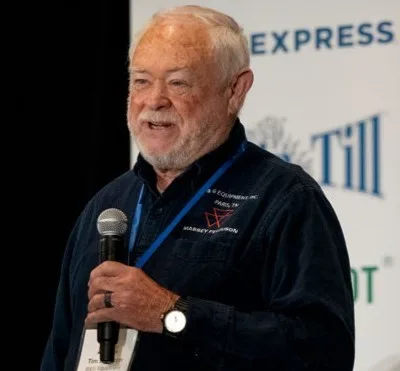
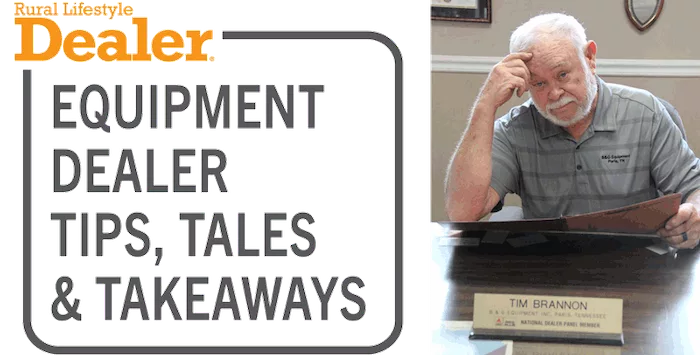
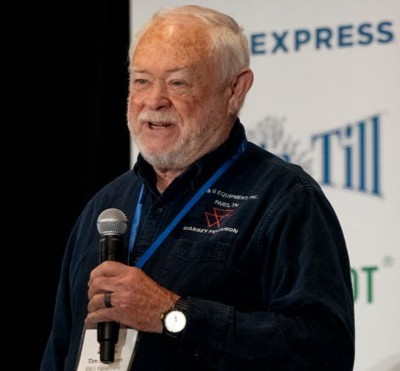
Told from the perspective of an in-the-trenches owner/operator — Tim Brannon of B&G Equipment, Paris, Tenn. — Equipment Dealer Tips, Tales & Takeaways shares knowledge, experiences and tips/lessons with fellow rural equipment dealerships throughout North America. Covering all aspects required of an equipment dealership general manager, Brannon will inform, entertain and provide a teachable moment for current — and future — leaders within equipment dealerships. |
 |