A small town in northwest Tennessee named Puryear (pur'-yur) was the closest market for services to the farm on which we resided. Well, actually Hazel, Ky., was a tad closer but, hey, we were Tennesseans. If you are wanting to know where that is on a map, look for the crook in the state line between Tennessee and Kentucky. Why is the line not straight?
Rumor has it the state line was surveyed from the Mississippi River to North Carolina and when the crew came to the Tennessee River, they stopped for a rest. The Chickasaw tribe was on the west bank and the Shawnee on the east. The two tribes had the tribal knowledge to raise corn and turn it into moonshine like no other. The survey party did, and results were a hangover like none before.
As they paddled across the river the next morning, the current swept them north. Under their derated conditions they gave up on walking back to the original line and just started east again, heads pounding. The survey crew later denied this, but the evidence is still there … I have digressed.
Harvey's Garage was my favorite place in Puryear. He had a big sign up that identified the place, but it had no ownerships. Harvey Paschall was the go-to mechanic for the area. He had gas pumps as well.
One rainy day Ms. Myrtle May Ellison cranked her Hudson car and drove to his garage. One could hear the stuck lifter and resulting noise from clear across town. She pulled up to the edge of the awning over the pumps, rolled down the window and began honking the Hudson's horn. Harvey had to get close to her as she had serious hearing issues, and as we saw the rain cascading down his back we heard her yell, "Do you hear that noise?"
He just turned around and motioned her into the garage. His by-word was Damn Me, which he spoke several times getting her in the shop. Now Myrtle was an artist, she drew portraits of several presidents who posed for the drawing. She was strong willed and refused to exit the car while Harvey raised the hood, determined that the lifter cover could be removed and the tappet freed. This was a common event before detergent oil; farmers had tractors waiting there to have the oil lines unclogged as well.
Those of us watching from the small room where the card table was located across from the cash register rolled with laughter as every so often, she would honk the horn and ask if he was about done. The first honk resulted in a near concussion as his head hit the hood. After the second honk Harvey disconnected the horn. An hour later — with a labor bill of $7.50 and 75 cents for a jar of Indian Head gasket sealer that he lost in a honk reaction somewhere — she was back on her way. That was customer service. No work orders, no estimates, flat rates, parts orders, waiting room (she would not have dared to associate with us local yocals), courtesy car or follow up assessment and customer rating of satisfaction. My, how things have changed.
There is a common thread — dedication to customer service. Do we still have this desire? Do we stay in contact with our customer (in a safer way) and, when needed, do we exit our comfort zones to achieve customer loyalty? I have to remind myself regularly of a rain-soaked Harvey as to what is required. Til next time, have lots of smiles and profits in your service.
|
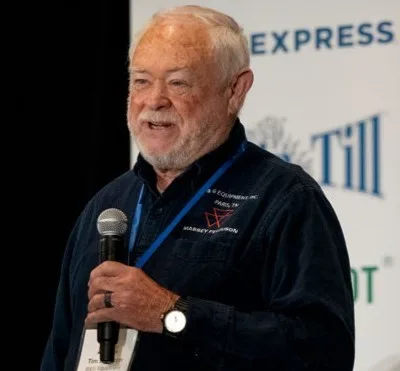
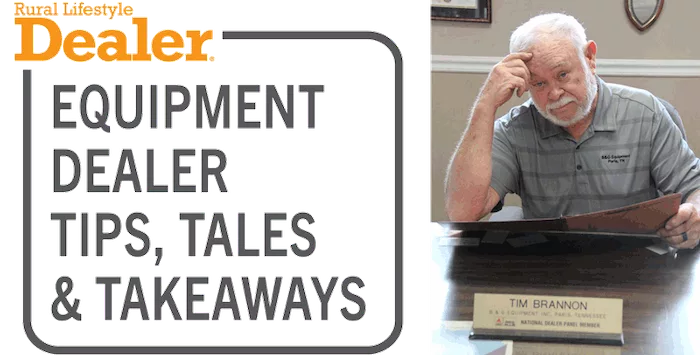
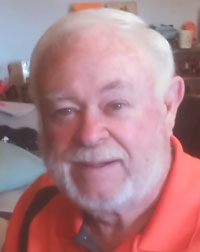
Told from the perspective of an in-the-trenches owner/operator — Tim Brannon of B&G Equipment, Paris, Tenn. — Equipment Dealer Tips, Tales & Takeaways shares knowledge, experiences and tips/lessons with fellow rural equipment dealerships throughout North America. Covering all aspects required of an equipment dealership general manager, Brannon will inform, entertain and provide a teachable moment for current — and future — leaders within equipment dealerships. |
 |